

Cotton t-shirt shrinkage is one of the most common complaints brands receive from customers — and one of the most preventable quality failures in the manufacturing process. A 100% cotton T-shirt can shrink up to 5% after the first wash under normal laundry conditions, which translates to a meaningful change in fit across all sizes in your range. Understanding what causes shrinkage, how to set the right tolerances in your tech pack, and what to ask your manufacturer about pre-shrinking treatments will protect your brand's reputation and reduce costly customer service issues from day one.
Why Cotton Shrinks: The Fiber Science
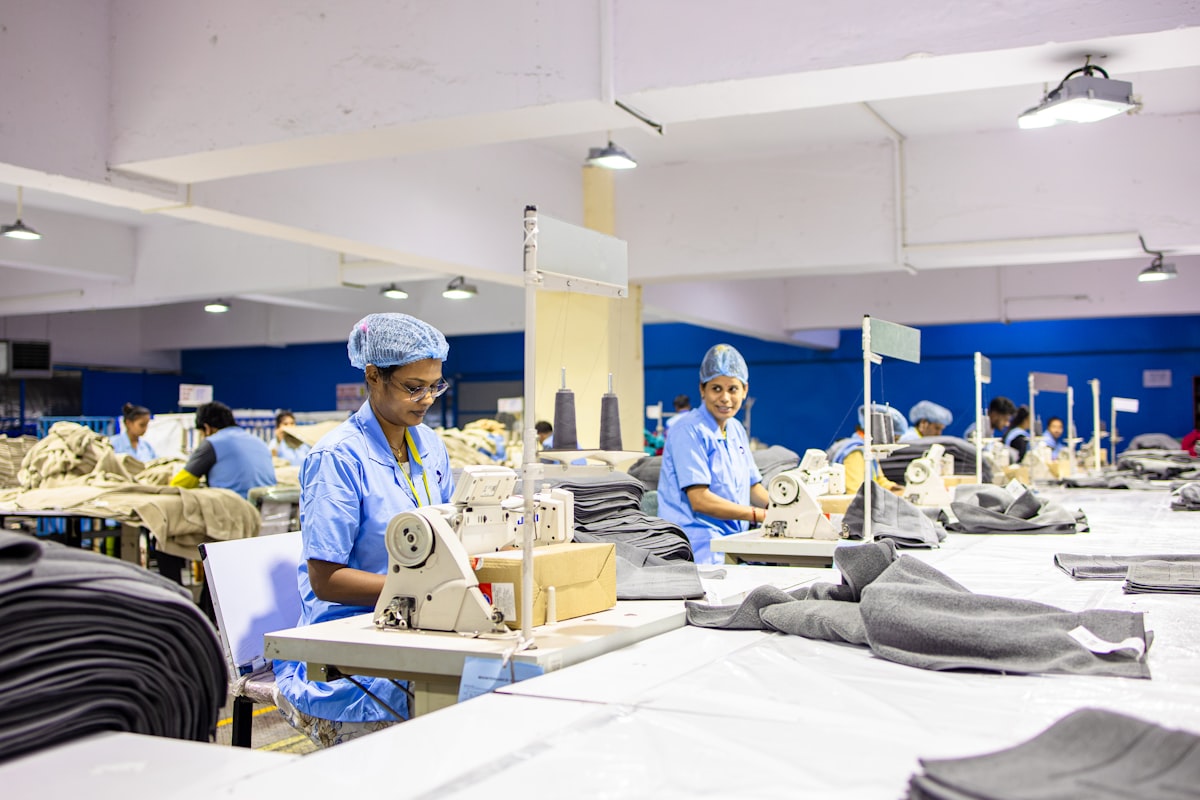
Cotton fiber shrinks because of the tension introduced during the manufacturing process. When cotton is spun into yarn, woven or knitted into fabric, and then cut and sewn into garments, the fibers are stretched and held under tension at multiple stages. The fabric reaches the finished garment in a slightly stretched, energy-loaded state. When the garment is exposed to water and heat during washing, the cotton fibers relax back toward their natural, unstretched state — and the fabric contracts.
The extent of shrinkage depends on several interacting variables: the fiber length and quality, the yarn construction (ring-spun vs. open-end), the knit or weave tightness, the GSM of the fabric, the wet processing steps during production, and the finishing treatments applied before the garment is packaged. A 100% combed ring-spun cotton single jersey T-shirt at 190 GSM, untreated, can be expected to shrink 3–5% in length and 2–4% in width after the first wash cycle under standard AATCC TM 135 test conditions.
For a vintage-washed T-shirt brand, this baseline is important to understand: most of your garments have already undergone a garment-washing process before they reach the customer. This pre-washing relaxes some of the tension in the fibers — but it does not eliminate residual shrinkage entirely unless the fabric has also been mechanically pre-shrunk before cutting.
Industry Shrinkage Standards and Tolerances
The AATCC TM 135 test standard is the primary reference point for measuring dimensional change in washed garments in the US market. Under this standard, the accepted maximum shrinkage tolerance for knitted fabrics (including single jersey T-shirts) is 5%. Many quality-conscious brands set stricter internal limits — typically 3% for both length and width — to reduce the likelihood of size complaints from customers who wash their garments at higher temperatures.
For brands selling into European markets, the EN ISO 6330 standard governs dimensional stability testing, with broadly similar tolerance expectations. EU consumers tend to wash garments at higher temperatures (40–60°C is common in many EU households, compared to the predominantly cold-wash habits of US consumers), which means shrinkage becomes a more acute issue if your fabric is not adequately pre-treated.
When you receive a test report from a third-party quality control lab, look for the dimensional change percentage noted separately for length (warp) and width (weft or course/wale). A result of -3% in length and -2% in width is broadly acceptable. A result of -6% or more in either direction indicates the fabric has not been adequately pre-shrunk and the garment will likely generate customer complaints about sizing after washing.

Pre-Shrinking Methods: What to Ask Your Manufacturer
There are three main mechanical and chemical methods factories use to reduce residual shrinkage in cotton T-shirts. Understanding what each involves will help you write clearer requirements in your purchase order and ask more precise questions during factory vetting.
Sanforizing is the oldest and most widely used mechanical pre-shrinking process for woven fabrics. Developed in 1930 by American inventor Sanford Lockwood Cluett, the process involves dampening the fabric to approximately 15% moisture content, then compressing it between a rubber belt and heated cylinders. This forces the warp yarns closer together, physically pre-shrinking the fabric in a locked state before cutting. Sanforized fabric typically shrinks less than 1% after subsequent washing — making it the gold standard for dimensional stability. However, sanforizing is primarily applied to woven fabrics; for knitted single jersey (the standard structure for T-shirts), the equivalent process is called compacting.
Compacting is the knit-fabric equivalent of sanforizing. The knitted fabric is fed through a compactor machine — essentially a pair of rollers and a heated shoe — that shrinks the fabric in both the length and width directions before it is cut and sewn. Most quality knit T-shirt manufacturers include compacting as a standard step; if your manufacturer does not, the untreated knit fabric can shrink up to 10% after garment washing, which is commercially unacceptable. Always confirm in writing that your fabric will be compacted before cutting.
Garment washing (the process your vintage-wash brand uses for aesthetic reasons) also incidentally pre-shrinks the garment. An enzyme-washed or stone-washed T-shirt has already been subjected to wet and mechanical processing, which relaxes much of the fiber tension built up during production. However, garment washing alone does not guarantee the same dimensional stability as fabric-level compacting, and the two processes are not interchangeable in your spec.
How to Write Shrinkage Requirements in Your Tech Pack
Your tech pack should include an explicit shrinkage tolerance that your manufacturer is required to meet and test against before approving bulk production. A standard requirement for a premium vintage-washed cotton T-shirt brand would read as follows:
- Dimensional change (shrinkage): ≤ 3% in length, ≤ 3% in width after 3 wash cycles (AATCC TM 135, 30°C, tumble dry low)
- Pre-treatment: fabric must be compacted before cutting and sewing
- Garment washing: enzyme wash or as specified (counts toward pre-shrinking, not a substitute for fabric compacting)
- Test method: measure key points (HPS to hem, chest width, sleeve length) before and after wash; submit test report with bulk approval sample
If your manufacturer cannot provide a test report showing dimensional change data, that is a significant quality red flag. Reputable factories producing for quality brands routinely test for dimensional stability as part of their standard pre-production approval process.
Grading Up to Compensate for Shrinkage
Even with proper pre-shrinking, some residual dimensional change is inevitable in 100% cotton. A common manufacturing practice is to grade up the cut measurements to compensate. If your target finished measurements include a 70 cm body length and you anticipate 2% shrinkage, your pattern should be cut at 71.4 cm body length to land at the correct dimension after washing and finishing. This adjustment, called positive ease or cut-and-sew allowance for shrinkage, should be discussed and agreed upon with your factory before cutting begins.
For vintage-washed garments, this calculation needs to account for both the fabric-level shrinkage from compacting and the additional dimensional change from the garment washing process itself. Enzyme washing typically causes 1–3% additional relaxation in the garment, which your factory should measure and account for when setting cut measurements. Always validate final washed measurements against your approved size spec before signing off on bulk production.
Key Takeaways
- 100% cotton T-shirts can shrink up to 5% after washing under standard AATCC TM 135 test conditions — most quality brands set an internal tolerance of ≤ 3% in both length and width.
- Compacting is the standard mechanical pre-shrinking process for knitted T-shirt fabric; confirm in writing that your factory compacts fabric before cutting.
- Garment washing (enzyme or stone) provides partial pre-shrinking as a side effect, but does not replace fabric-level compacting for dimensional stability.
- Include explicit shrinkage tolerances and test method requirements in your tech pack, and require a dimensional change test report with every bulk approval sample.
Frequently Asked Questions
How much do 100% cotton T-shirts shrink after washing?
An untreated 100% cotton T-shirt can shrink 3–5% in length and 2–4% in width after the first wash cycle under standard conditions. With proper fabric compacting and garment washing, this can be reduced to under 3% — the threshold most quality brands set as their maximum acceptable dimensional change per the AATCC TM 135 test standard.
What is compacting in T-shirt manufacturing?
Compacting is a mechanical pre-shrinking process applied to knitted fabrics before cutting and sewing. The fabric is passed through a compactor machine that physically shrinks it in both the length and width direction, locking the fibers in a more relaxed state. Properly compacted knit fabric typically shows less than 3% residual shrinkage after washing, compared to up to 10% for untreated knit cotton.
Does garment washing (enzyme wash) prevent shrinkage in vintage T-shirts?
Garment washing relaxes fiber tension and partially pre-shrinks the garment, but it is not a substitute for fabric-level compacting. Enzyme-washed T-shirts still show 1–3% additional dimensional change after consumer washing if the underlying fabric was not properly compacted before cutting. For reliable shrinkage control, both compacting and garment washing should be specified in your tech pack.
How do I write shrinkage requirements in my garment tech pack?
Specify a maximum dimensional change of ≤ 3% in length and ≤ 3% in width after 3 wash cycles, referencing AATCC TM 135 (30°C, tumble dry low) as the test method. Require that fabric is compacted before cutting and that the factory submits a dimensional change test report — showing key-point measurements before and after washing — with every bulk approval sample.
Final Thoughts
Shrinkage is a solvable problem — but only if you address it at the specification stage, before your bulk order is cut. Brands that ignore shrinkage tolerances in their tech packs, or fail to require dimensional stability testing, end up managing the fallout in customer service reviews and return rates instead. Getting your shrinkage requirements right is one of the highest-leverage quality decisions you can make as a new brand. Start building your brand on solid manufacturing fundamentals at Storiginator — the platform designed for clothing brand founders who want to get manufacturing right from the start.
0 comments